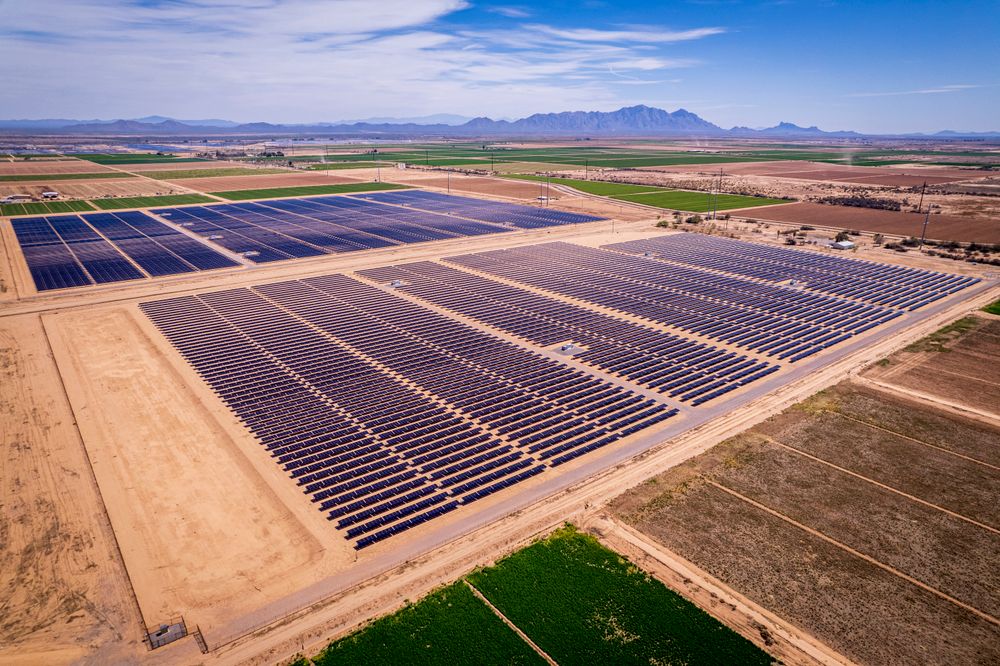
Financing solar panels on a commercial building
Grants, studies, support tariffs, loans and steps to check for financing solar panels on a company roof or car park.
Executive summary
Installing solar panels on a commercial building can reduce exposure to electricity prices, make use of a roof or car park, and contribute to the company's energy goals. The arrangement, however, depends on the power rating, the consumption profile, who owns the building, the grid connection, how the electricity is used and the support rules applicable on the date of the project. There is no single, universal grant automatically covering every photovoltaic installation.
This guide helps distinguish study funding, production-support schemes, territorial grants, bank solutions and contractual mechanisms. It offers a method for qualifying a project, documenting expenses, checking the timetable and avoiding treating a tariff or premium that depends on an order, a power rating or an application date as something already secured.
Why finance a business solar project?
Photovoltaic solar turns light into electricity. On a business site, the economic value first depends on how well output matches use. A business that consumes during the day can directly use a significant share of the electricity produced. A site with low or seasonal weekend consumption may have a different profile. The goal, then, is not simply to maximise the area covered with panels, but to size an installation consistent with needs, the grid, the roof and the budget.
Financing can cover different building blocks: feasibility study, engineering, any necessary roofing works, panels, inverters, control systems, grid connection, electrical protection, mounting structure, supervision, any storage, and commissioning. These expenses are not automatically all eligible under the same mechanism. One scheme may support a study, while a purchase tariff governs how the electricity is valued and a loan finances the overall investment.
Choosing between self-consumption, selling the surplus and selling everything
With individual self-consumption, the electricity produced is used on site and any surplus can be fed into the grid under the applicable contract and scheme. The value of self-consumed electricity corresponds to the avoided grid purchase, provided costs and periods are compared properly. Selling the surplus provides separate revenue, defined by the applicable support framework or contract. Selling the entire output follows a different economic logic, and access to it can vary by segment and by the rules in force.
Collective self-consumption lets several consumers and producers share output under the applicable rules, boundaries and allocation arrangements. It can be considered for a business park, a mixed-use property or neighbouring players, but requires a specific legal and operational organisation. Battery storage can shift part of the consumption, but its cost, efficiency, lifespan and replacement must be built into the model rather than assumed profitable as a matter of course.
Defining the power rating and scope of the project
Peak power, expressed in kWp, affects the administrative regime, the grid connection, the support mechanisms and the economics of the project. A small retail roof is not comparable to a large logistics roof or a car-park canopy. Sizing must take into account the area genuinely available, shading, orientation, pitch, load-bearing capacity, the condition of the roof covering, fire-safety constraints, maintenance access and any asbestos-removal or renovation works needed.
Ask for a study that sets out its assumptions: annual output, losses, availability, degradation, the production curve, expected self-consumption, surplus, grid-connection costs, insurance and upkeep. Require cautious, central and favourable scenarios. Output figures are not revenue guarantees: they depend on weather, shading, equipment, operation and contractual conditions.
Who can lead the project?
The applicant may be the occupying company, the building's owner, a property company, a special-purpose project company, a local authority or a group of players. It must be established who pays for the works, who owns the installation, who receives the revenue, who bears the risks and who is responsible for maintenance. If the company is a tenant, the lease, the owner's authorisations, end-of-contract responsibilities and the fate of the equipment must be dealt with upfront.
Within a group, the company that owns the building may differ from the one that consumes the electricity. This separation affects the occupancy contract, billing, accounting treatment and the analysis of grants. Public schemes may precisely define the beneficiary, the owner of the assets, the size of the company or the place of investment. The applicant entity must therefore be matched against the regulation's definition, rather than assuming that any company linked to the site can file the application.
Grants for feasibility studies
A study is a useful step when the project has technical, economic, legal or grid-connection uncertainties. ADEME publishes schemes and specifications for certain renewable-energy studies. The official sheet "Aide aux études de faisabilité pour de l'autoconsommation électrique photovoltaïque" (Grant for feasibility studies on photovoltaic electrical self-consumption) describes possible support for outside services, with rates and a cost base that must be checked under the conditions applicable to the case. The page can be a lead to qualify, but its historical title and vintage mean the current version must be confirmed with ADEME before including a grant in the financing plan.
An eligible study generally has to be commissioned from a provider meeting the scheme's requirements, follow a defined scope and comply with the filing rules. Do not assume an installer's invoice or a study already under way will be eligible. Contact the body beforehand, obtain the current version of the specifications, clarify the date from which expenses are taken into account, and keep the reply on file.
The Fonds Chaleur: do not confuse photovoltaic and solar thermal
ADEME's Fonds Chaleur (Heat Fund) supports certain renewable heat-production projects, including solar thermal installations. Solar thermal produces heat, for example for hot water or certain process needs; photovoltaic produces electricity. The two technologies meet different needs and different criteria. A company with significant hot-water needs may look into a thermal solution, while a roof fitted with photovoltaic modules serves a different purpose.
ADEME's 2026 pages on solar thermal hot water, combined solar systems or certain solar heat pumps describe schemes running over the announced period. They must not be presented as grants for electric photovoltaic panels. For each project, check the technology, the beneficiary, the region, the technical conditions and the deadline shown on the official sheet.
Purchase tariffs, premiums and regulatory support
The purchase tariff and any premiums are not equivalent to a standard grant. They depend on the regulatory framework, the power rating, the type of installation, how the electricity is used, the date the complete application is filed, and the rules applicable when the project enters the scheme. Orders can be amended; tariffs and coefficients can be revised periodically. A guide should therefore avoid publishing an amount presented as permanent.
The Commission de régulation de l'énergie (CRE) makes available the photovoltaic tariff orders and updated data. Before costing the project, identify the exact category, the power rating, the type of building or canopy, commissioning obligations and the possible contract. If a regulatory change is under consultation or still only a draft, do not present it as a rule already in force. Have the terms confirmed by the obligated buyer, the grid operator or the mandated professional.
Mid-range power ratings and large roofs
Projects of several dozen or several hundred kWp may be subject to conditions different from those for small installations. The power rating can mean longer grid-connection studies, a more detailed analysis of grid capacity, different support rules and specific requirements on equipment or its sourcing. The DGE has published information on changes to photovoltaic schemes, and the CRE documents tariff frameworks and their amendments. Read the current texts, rather than reusing an old tariff quoted in a press article.
For a large-roof project, set a realistic timetable early on: structural survey, any roof renovation, electrical study, planning, grid connection, tendering, ordering, works, testing, commissioning and contracting. Grid lead times can become a critical factor. Funding with a deadline that falls before commissioning is genuinely possible may be unsuitable, even if the project looks technically sound.
Regional, local grants and calls for projects
Regions, metropolitan areas, inter-municipal bodies and energy syndicates can publish calls for projects or investment schemes for renewable energy, self-consumption, business premises or SME transition. Their existence, budget and timetable change. Some programmes target studies, others investment, collective projects, business parks or specific industries. A closed call is still useful for understanding past criteria or anticipating a future round, but must never be presented as open.
The search must be geographic: the site's address, region, department, municipality, business park, the building's status and the company's sector. Check the official sites of the regional council, the regional ADEME office, the economic development agency, the inter-municipal body and the relevant public operators. Note the exact title, the update date, the filing period, eligible expenses, the documented rate or ceiling, the aid scheme and the contact who processes applications. A generic "ecological transition" page is not enough to confirm a solar project's eligibility.
Loans, leasing and bank financing
When grants only cover part of the project, the rest can be financed with equity, a bank loan, leasing or a contract with a third-party investor. A loan must be assessed on its total cost, guarantees, repayment schedule and repayment capacity. Leasing can separate using the equipment from acquiring it outright, but the ownership, maintenance and exit terms must be analysed. Third-party financing can reduce the initial investment, in exchange for sharing the value or contractual commitments.
Compare several arrangements on a consistent basis: initial investment, operating expenses, insurance, upkeep, inverter replacement, tax treatment, cost of capital, sales revenue and purchase savings. Avoid comparing an installation price excluding grid connection with an offer that includes all services. If a grant is expected, check how it is treated in the bank agreement and in the cash-flow plan; do not include it as certain income before it is notified.
Collective self-consumption and third-party investment
In a collective self-consumption scheme, several participants can share the electricity under the scheme's rules. This arrangement can suit neighbouring sites, mixed-use buildings or a business park, but requires defining the participants, the allocation keys, how changes of consumer are managed, the contracts and how gaps between output and demand are handled. The project must also set out who runs the operation and how costs are shared.
Third-party investment can take several forms: roof lease, electricity sales contract, project company or occupancy agreement. Terms vary and the risks do not disappear; they are redistributed. The company must examine the duration, the price of electricity, indexation, maintenance obligations, performance guarantees, insurance, roofing works, penalties, termination rights and what happens to the equipment at the end of the contract. An announced saving is only meaningful if its assumptions are transparent.
Storage, charging points and load management
A battery can shift part of the output to a later consumption period. Its relevance depends on the hourly profile, the power rating, the price of electricity, investment costs, round-trip efficiency, lifespan and the management strategy. Storage should not be added to a solar project by default. The solar-only scenario should be compared with one combining panels, storage and smart management.
Electric-vehicle charging points, cooling equipment, pumps, IT systems or industrial processes can be managed according to output. This management can increase self-consumption without a battery, provided it does not disrupt operations. Financing for this equipment may fall under separate schemes. Break down costs by component, and do not assume a solar grant automatically covers charging points, batteries, software or grid works.
Roof, structure and preliminary works
The roof is often one of the project's biggest risks. Before sizing the panels, its age, waterproofing, load-bearing capacity, the presence of asbestos, fire-safety requirements and maintenance access must be known. Roof repair may be necessary, but the renovation cost is not automatically eligible under the same funding as the photovoltaic installation. If the works have to be carried out regardless, separate the roof's base cost from the extra cost specifically linked to the energy project.
Changing the building's external appearance may require a prior planning declaration; local rules, protected areas and heritage constraints must be checked with the town hall. Car-park canopy or new-building projects may also be subject to specific obligations depending on the surface area, the date and the site's status. Legal obligations are not in themselves a grant: they can, however, influence the technical choice and the timetable.
Grid connection and network capacity
The grid connection must be dealt with early, since its cost and lead time can change the project's profitability. Depending on the power rating and configuration, the project may require a study, reinforcement works, protective equipment or an adapted delivery point. The installation quote must state what is included and what depends on the grid operator. A generic estimate is not a confirmed connection quote.
The file must include the processing timetable, authorisations, any grid works, testing and commissioning. The financing chosen must accommodate this timetable. The treatment of electricity fed into the grid, metering obligations, the sales contract and operating responsibilities must also be clarified. Revenue assumptions must distinguish theoretical output, self-consumed output, surplus fed into the grid and losses.
Building a solid budget
The budget should have separate lines for the study, engineering, modules, inverters, structure, electrical works, protective equipment, supervision, grid connection, roofing, site safety, insurance, maintenance, component replacement and financing costs. For each item, keep a dated quote and the detail of the assumptions. Costs must be consistent with the power rating, the site and the timetable.
Draw up a financing plan distinguishing equity, debt, any leasing, confirmed grants, grants applied for and future revenue. An application filed is not an award decision. The cautious scenario must remain viable in case of refusal, lower output, a connection cost overrun or delay. If the project is only profitable under an optimistic scenario or thanks to an unconfirmed grant, the sizing or contractual terms should be revisited before committing expenses.
Calculating the economic return without overstating gains
The economic model must compare the installation's total discounted cost with purchase savings and sales revenue, over a period consistent with the equipment and contracts. Include hourly self-consumption, avoided prices, sale tariffs, how tariffs change, fixed costs, maintenance, insurance, losses, module degradation, replacements and the cost of financing. The value of self-consumed electricity must not be counted a second time as sales revenue.
Calculate at least a cautious scenario, a central scenario and a favourable scenario. Test lower output, a more expensive connection, a drop in market prices, a construction delay and lower self-consumption. If a grant is included, compare the return with and without it. This approach avoids presenting a single payback period as guaranteed, and makes it possible to decide whether the project remains worthwhile when assumptions change.
Cumulating grants and State aid rules
Cumulation rules depend on the nature of the support, the size of the company, the expense, the legal regime and the scheme. There may be intensity ceilings, de minimis rules, exclusions on double funding and obligations to declare other aid received or applied for. Tariff support, a study grant, an investment grant and a loan are not necessarily treated the same way. The texts and decisions applicable to the specific case must be checked.
Keep a central register of grants: body, scheme, application date, costs concerned, amount requested, amount notified, payment date, aid scheme and reporting obligations. Allocate expenses across funders. If an item appears in two applications, explain the split and confirm it complies with cumulation rules. If in doubt, ask the body processing the application or a qualified advisor for a written answer.
Filing timetable and committed expenses
The timetable is decisive. Some schemes require an application before work starts or before any legally binding commitment; others rest on a complete application, selection through a call for projects, or a commissioning date. Do not order equipment, sign an irreversible contract or start a study assuming the costs will be accepted. The definition of "start of works" varies by scheme: have the applicable rule confirmed.
Build a backward schedule covering internal sign-off, studies, quotes, the planning application, grid connection, the grant application, notification, orders, works, testing and commissioning. Add margins for authorisations, suppliers and grid uncertainties. For a call for projects, check the exact dates and required documents; an incomplete submission can be rejected even if the project is sound.
Documents to gather for the application
Prepare a structured file: company registration extract, the applicant's identity, the company's structure and size, proof of ownership or the lease, the site's address and references, electricity bills, load curves if available, roof plans and photographs, the structural study, the output study, the electrical diagram, quotes, the budget, the financing plan, the timetable, authorisations, an economic calculation note and declarations on other grants. The scheme may ask for other items, including environmental or technical documents.
The documents must tell the same story. The power rating shown in the study must match the quotes and the application. The beneficiary must be consistent with the contracts. Dates and amounts must be traceable. Do not send only a sales brochure: explain the project, its risks, its expected results and why financing is needed. Keep a version-controlled file and archive exchanges with the body processing the application.
Common mistakes to avoid
The first mistake is confusing photovoltaic with solar thermal, or a funded study with funding for the works. The second is reusing an old tariff or premium without checking the current text. The third is assuming a regional grant exists everywhere and is open. The fourth is underestimating the grid connection, roofing works or operating costs. The fifth is starting works before checking the filing rules.
Other common mistakes include: sizing based only on available area, overestimating self-consumption, forgetting weekend needs, neglecting the owner's rights, ignoring maintenance, double-counting savings and revenue, or presenting support applied for as already secured. A pre-filing control matrix reduces these risks and makes later audits easier.
Example: an industrial SME with daytime consumption
An industrial SME owns a workshop and consumes a large share of its electricity during production hours. It wants to fit its roof with photovoltaic panels. Before choosing the power rating, it analyses its load curves, annual shutdowns, the roof structure, maintenance works and the grid operator's constraints. The study compares several installation sizes, distinguishing self-consumed output from the surplus.
The team then checks the official support conditions in force for the chosen power rating, checks whether a study can be supported, examines territorial grants and requests several financing offers. The quotes separate the roof covering, panels, inverters, grid connection and supervision. The management committee compares the no-grant and hypothetical-grant scenarios. The final decision rests on documented data, not on a promise of standard profitability.
Example: the owner of a warehouse let to several companies
An owner holds a warehouse whose space is occupied by several companies. Electricity consumption is split across different meters and tenants keep different hours. Before investing, the owner studies how output would be allocated, the occupancy contracts, the possibility of collective self-consumption and the merits of selling to a third party. It must be established who will be the producer, who will use the electricity and who will be responsible for maintenance.
The legal and economic study compares leasing the roof, direct investment and a collective scheme. The chosen arrangement specifies the price, responsibilities, access rights, management of works, insurance and the end of the contract. Grants are researched for the entity and the expenses that are genuinely eligible; the owner does not assume that schemes intended for an occupant are open to it.
The Capital OS method: turning research into a usable match
For a matching engine, more than a grant's name and the keyword "solar" must be recorded. The record must describe the funder, the territory, the beneficiaries, the type of technology, the project stage, any power rating, eligible expenses, the documented rate and ceiling, dates, documents, exclusions, cumulation rules, status and the official source. The engine must distinguish a generic lead, a verified record, an open call, a closed call and a condition still to be confirmed.
The project's characteristics must be structured: SIRET number, size, sector, the building's location, owner or tenant status, type of roof, power rating, self-consumption, surplus sale, technology, start date, cost, available financing and timetable. A positive match must then explain why the record is relevant and which conditions remain blocking. Do not infer eligibility from the mere presence of a word like "energy" or "transition".
Catalogue of funding leads to check
The catalogue below is meant to guide research and is not confirmation of eligibility. For any application, open the official source, check the vintage, the filing date, the technology covered, eligible expenses and cumulation conditions.
- ADEME — grant for feasibility studies on photovoltaic electrical self-consumption: a lead for study services; check the current sheet and applicable conditions before placing any order. The sheet consulted describes possible funding for part of the study, but its version and criteria must be confirmed with ADEME.
- ADEME — Fonds Chaleur schemes: relevant for certain solar thermal and heat-production projects, not a generic grant for electric photovoltaic installation. Check the technology and the 2026 specifications.
- CRE — photovoltaic tariff orders for mainland France: the reference source for checking the tariff framework, categories and updates. This regulatory mechanism is not a standard investment grant.
- CRE — photovoltaic tariff orders in non-interconnected zones: to be examined for sites concerned, depending on the territory and the project's category.
- Regional and local grants: research the schemes of the region, the inter-municipal body or territorial operators, checking that applications are open and that companies are eligible.
- Bank loan, leasing or third-party investment: financing solutions to compare on the basis of total cost, ownership of the asset and contractual obligations. They should not be presented as grants.
- National or European calls for projects: to be examined only if the specifications explicitly target the type of project, the maturity, the applicant and the territory concerned.
Checklist before filing an application
- Identify the applicant entity, the owner and the user of the electricity.
- Confirm the technology: electric photovoltaic or solar thermal.
- Measure consumption and build a credible hourly profile.
- Confirm the condition and capacity of the roof or car park.
- Determine the power rating and the intended use of the electricity.
- Obtain a complete quote and identify the excluded items.
- Check planning rules and the feasibility of the grid connection.
- Consult the official sheets and note the verification date.
- Check the filing timetable and the definition of the start of works.
- Distinguish open, closed, historical and merely candidate grants.
- Document the financing plan without counting undecided grants as secured.
- Check cumulation rules and costs already funded.
- Archive quotes, studies, official replies and supporting documents.
- Prepare a no-grant scenario and economic sensitivities.
- Submit an application consistent with the contracts, the budget and the timetable.
Content written and under editorial review — this is not an eligibility assessment; only the personalised report applies your company's real criteria.
Beyond the guide
Check your actual eligibility for public grants
This guide presents the schemes recorded by Capital OS. The personalised report applies your real criteria — industry, size, location, project — before drawing any conclusion on eligibility.
See the opportunities identified by the scan, then access your personalised report.